

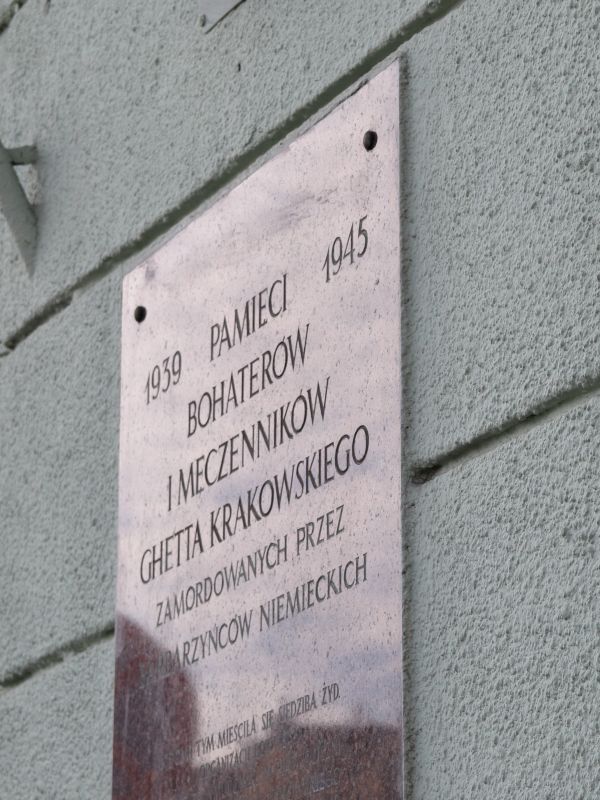
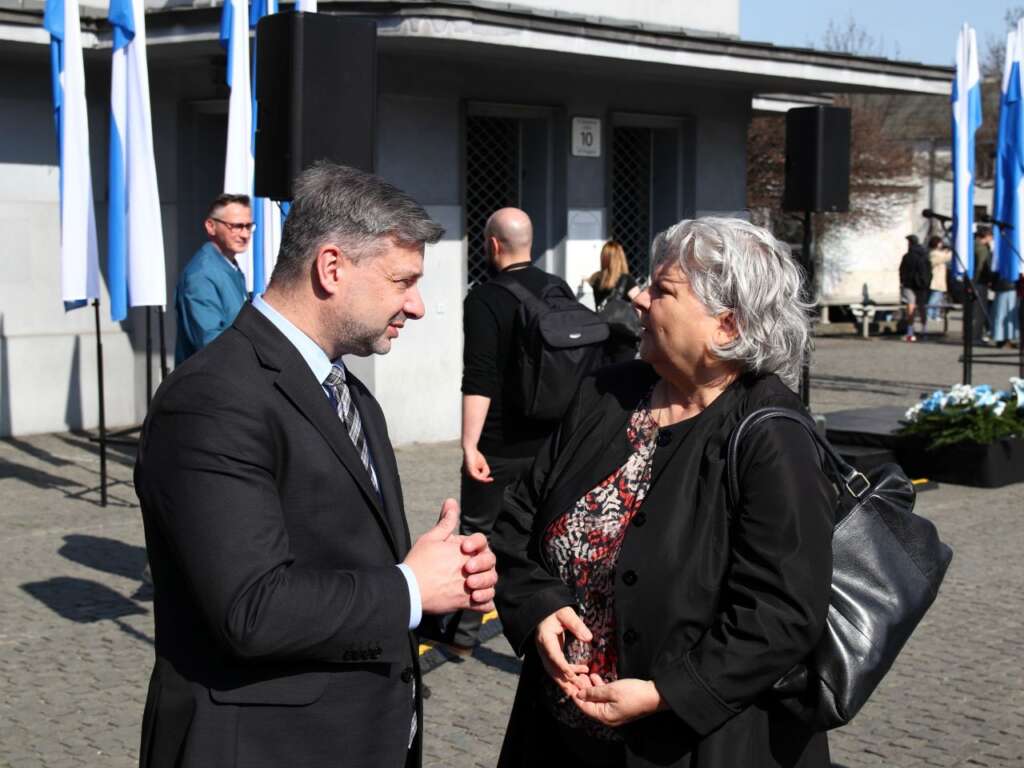
On Sunday, March 15, 2026, at noon, ceremonies commemorating the 83rd anniversary of the liquidation of the Kraków Ghetto by the German occupiers (March 13–14, 1943) were held at Bohaterów Getta Square.
The Jewish Religious Community of Kraków was represented in the commemorative march by its Chairwoman, Helena Jakubowicz, together with members of the Board and the Community.
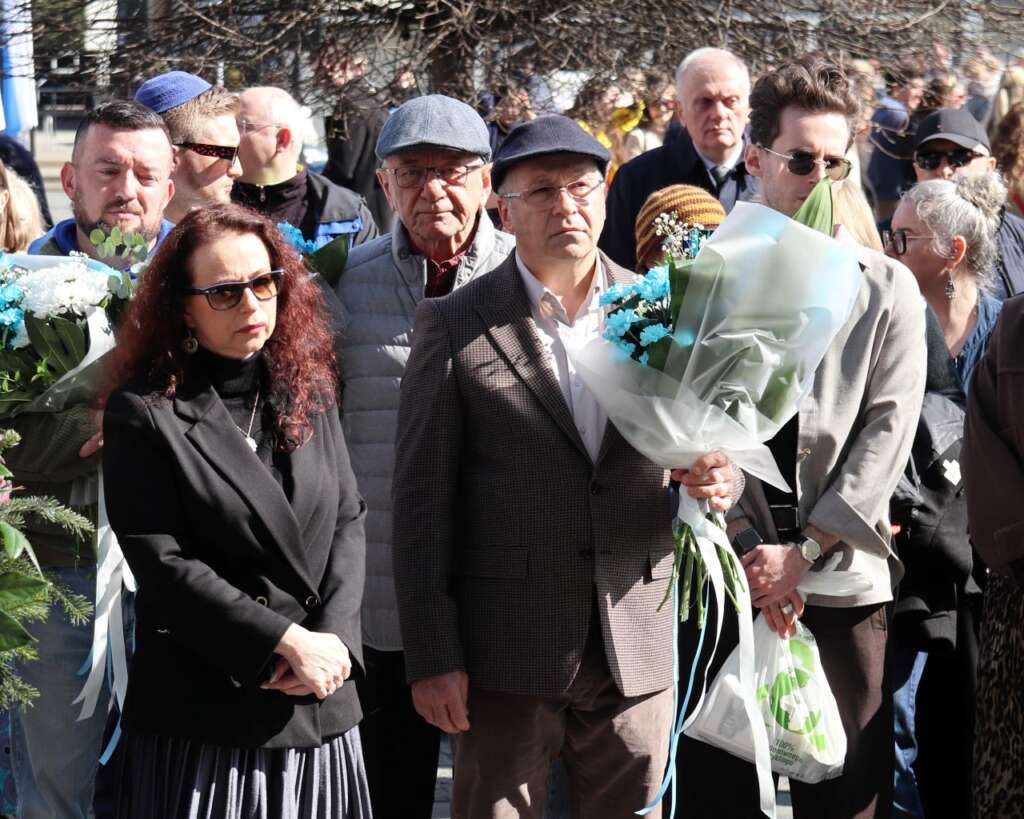
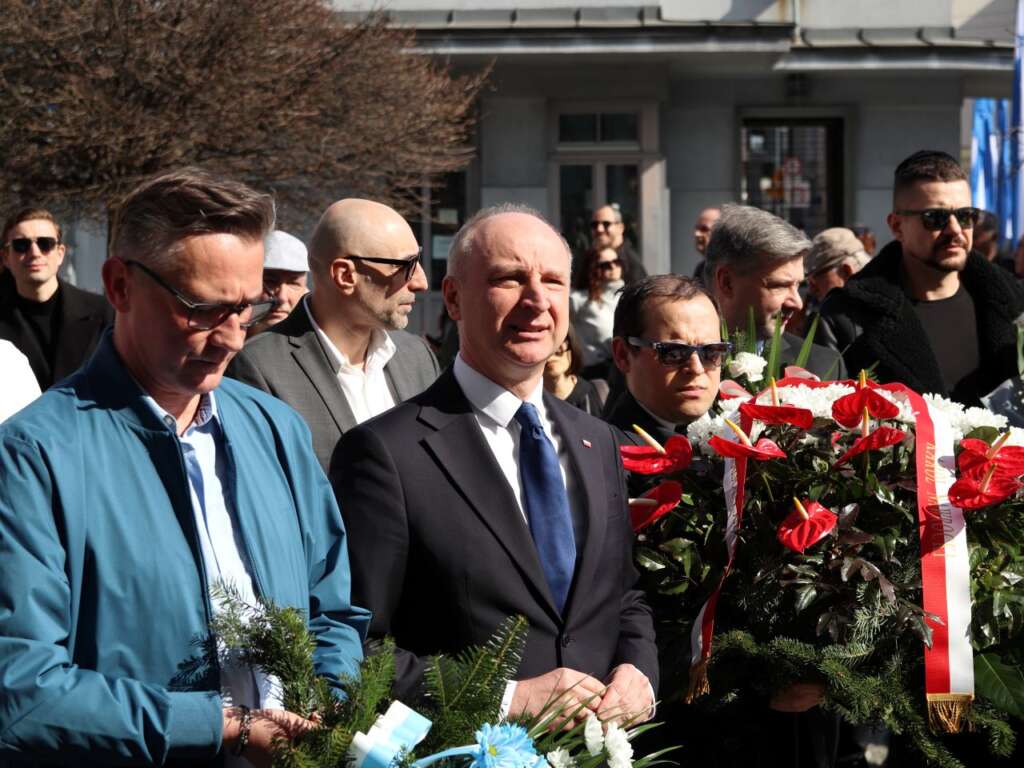
Among those attending the ceremony were Wojciech Kolarski, Secretary of State in the Chancellery of the President of the Republic of Poland; Stanisław Kracik, Third Deputy Mayor of Kraków; Cardinal Grzegorz Ryś, Metropolitan Archbishop of Kraków; Dr. Filip Musiał, Director of the Kraków Branch of the Institute of National Remembrance; as well as many residents of Kraków.
Speaking on behalf of the organizer of the march, Robert Gądek, Chairman of the Jewish Culture Festival, welcomed the participants, including representatives of the authorities and the Jewish community. He emphasized that the march is a civic duty and an important act of remembrance for the former Jewish residents of Kraków, who before the war constituted a quarter of the city’s population.
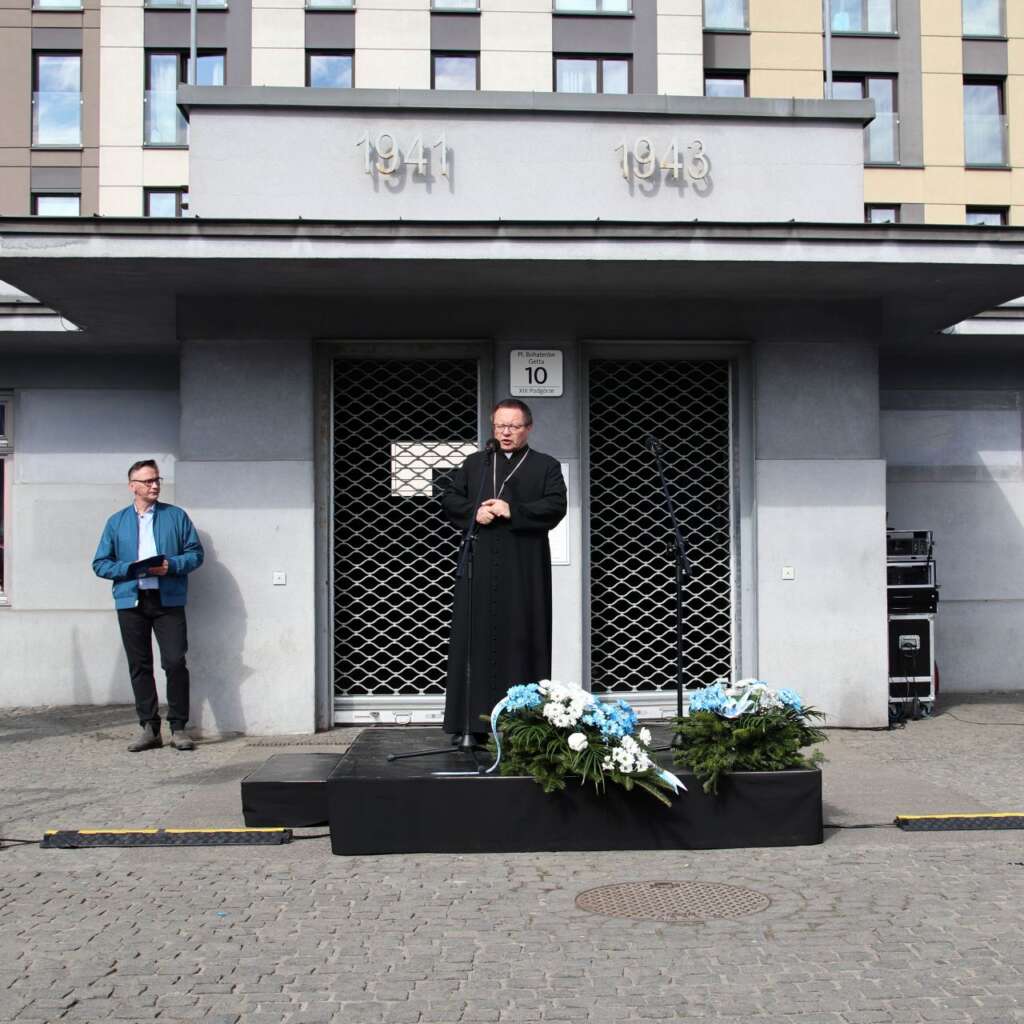
Cardinal Grzegorz Ryś also addressed the participants. In his brief remarks, he referred to Jan Karski, a native of Łódź, quoting words Karski spoke in 1981 at the United States Holocaust Memorial Museum: “The Holocaust is the second original sin.”
He also recalled another statement by Karski: “Together with my entire family I am a Jew.” “He was not Jewish,” the Metropolitan of Kraków emphasized, “but he said this because one cannot remain indifferent in the face of the Holocaust.”
He noted that the participants of the march should adopt a similar attitude. “When we come to this march, we must say the same about ourselves: I am Jewish,” he said, explaining that this is a way of clearly standing on the side of the Victims.
Helena Jakubowicz, Chairwoman of the Jewish Religious Community in Kraków, emphasized in her speech that the ceremony is a time for reflection and for paying tribute to those who were murdered simply because they were Jewish. She also recalled the long-time Chairman of the Jewish Religious Community in Kraków—her father, Tadeusz Jakubowicz, a Holocaust survivor:
“Throughout his life, my father passed on to us the values he developed during those terrible times. He taught us how important it is to preserve the memory of the past, how vital it is that we do not forget the victims and do not repeat the mistakes of history. His story is for me not only a personal testament, but also a reminder that in the face of evil one can still find beauty in simple acts of love, understanding, and respect for one’s fellow human beings.”
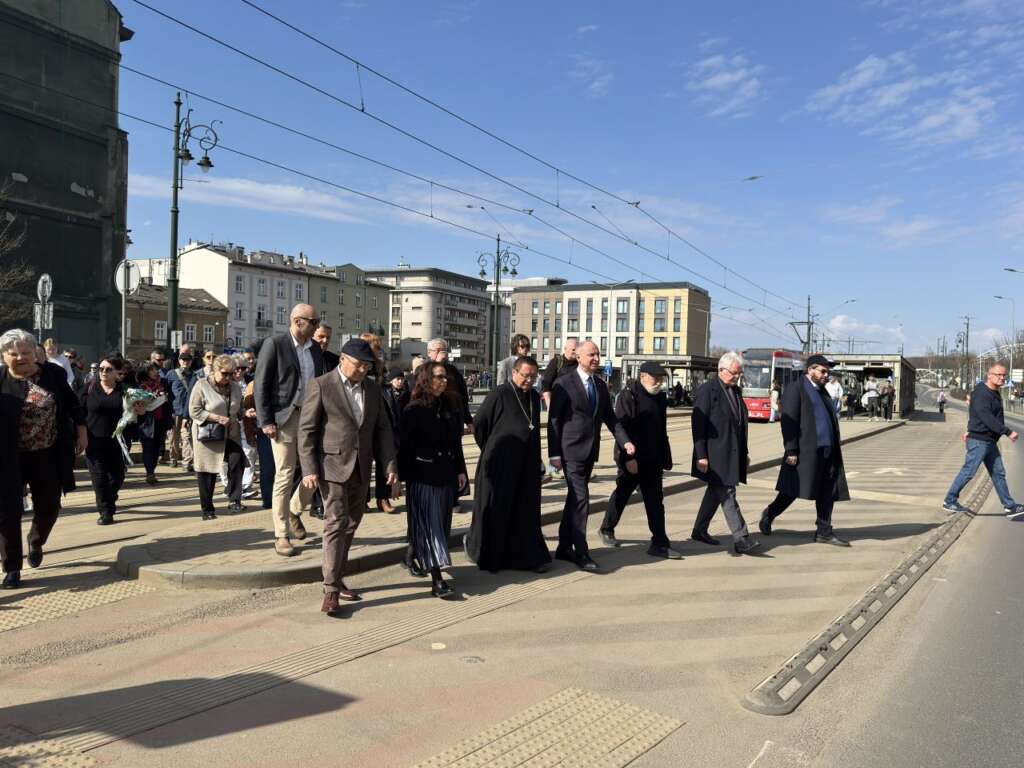
The participants then set out on the March of Remembrance along the route taken in March 1943, when Jews were led out of the ghetto during its liquidation. The march proceeded along Na Zjeździe and Lwowska Streets, where flowers were laid and a prayer was recited at a preserved section of the original ghetto wall.
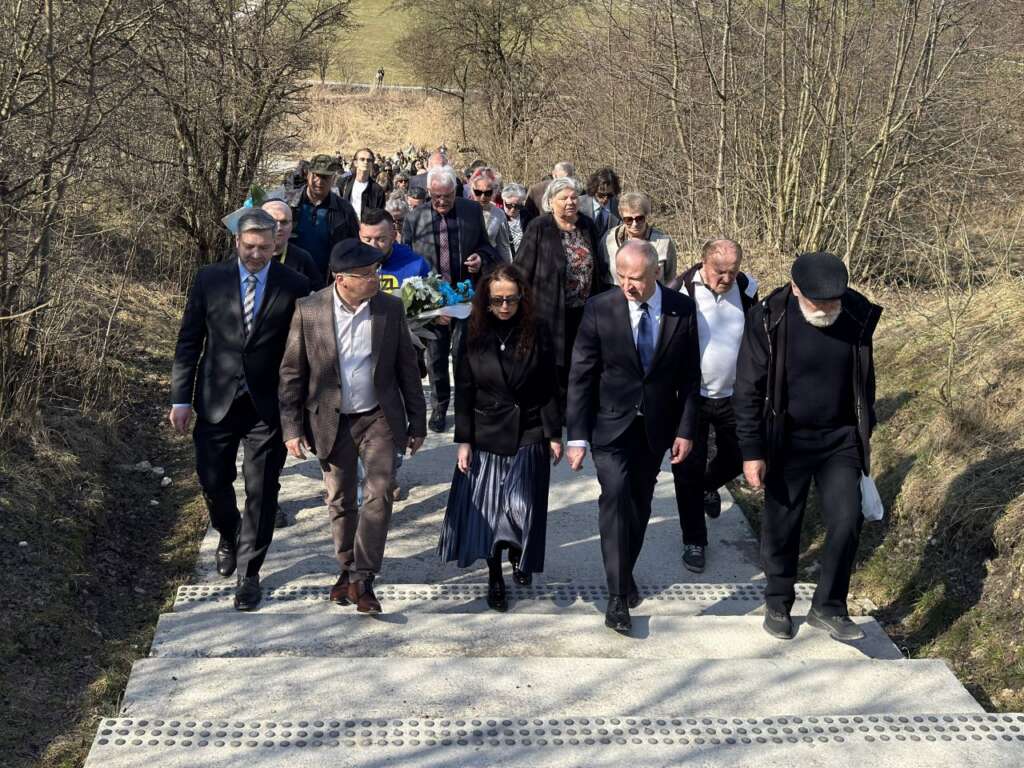
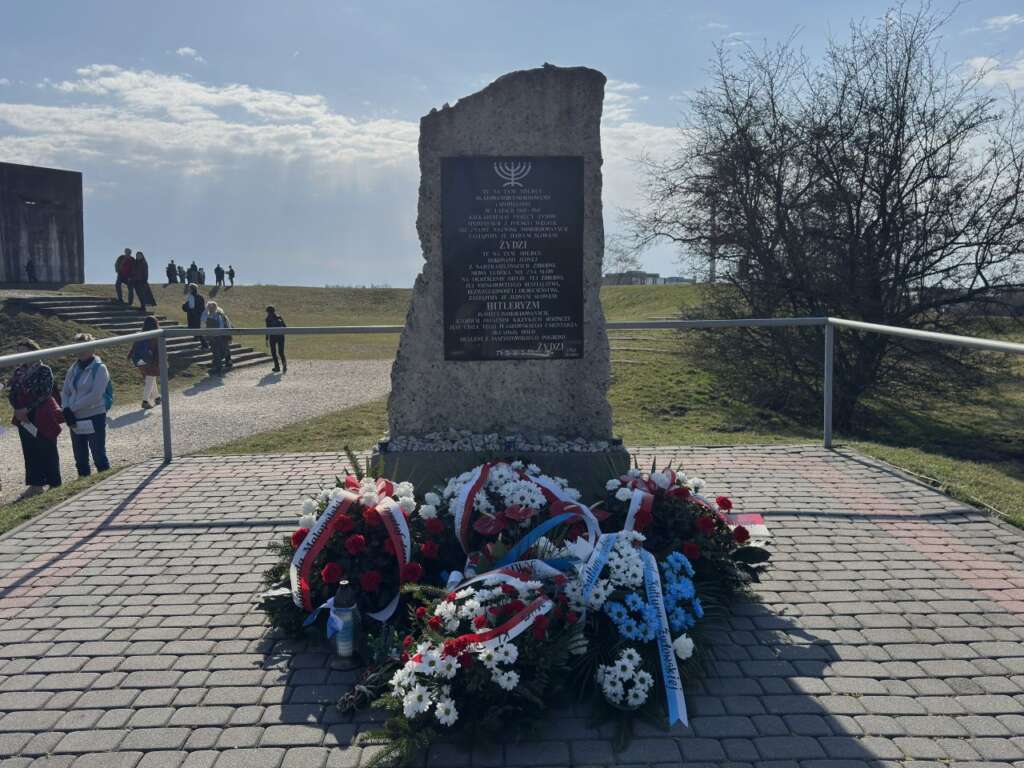
The participants then continued along Limanowskiego, Wielicka, Jerozolimska, and Abrahama Streets to the site of the former German concentration camp KL Płaszów.
Following the speeches, participants set out on the Memorial March to the site of the former German ZAL/KL Płaszów camp, retracing the route taken on March 13, 1943, by 6,000 to 8,000 residents of the ghetto—along Na Zjeździe, Lwowska, Limanowskiego, Wielicka, Jerozolimska, and Abrahama Streets. The ceremony concluded with a communal prayer
Thank you for remembering.
Photos: Michał Zajda and Samuel Dybek
More photos in the gallery: https://gwzkrakow.pl/en/gallery/